
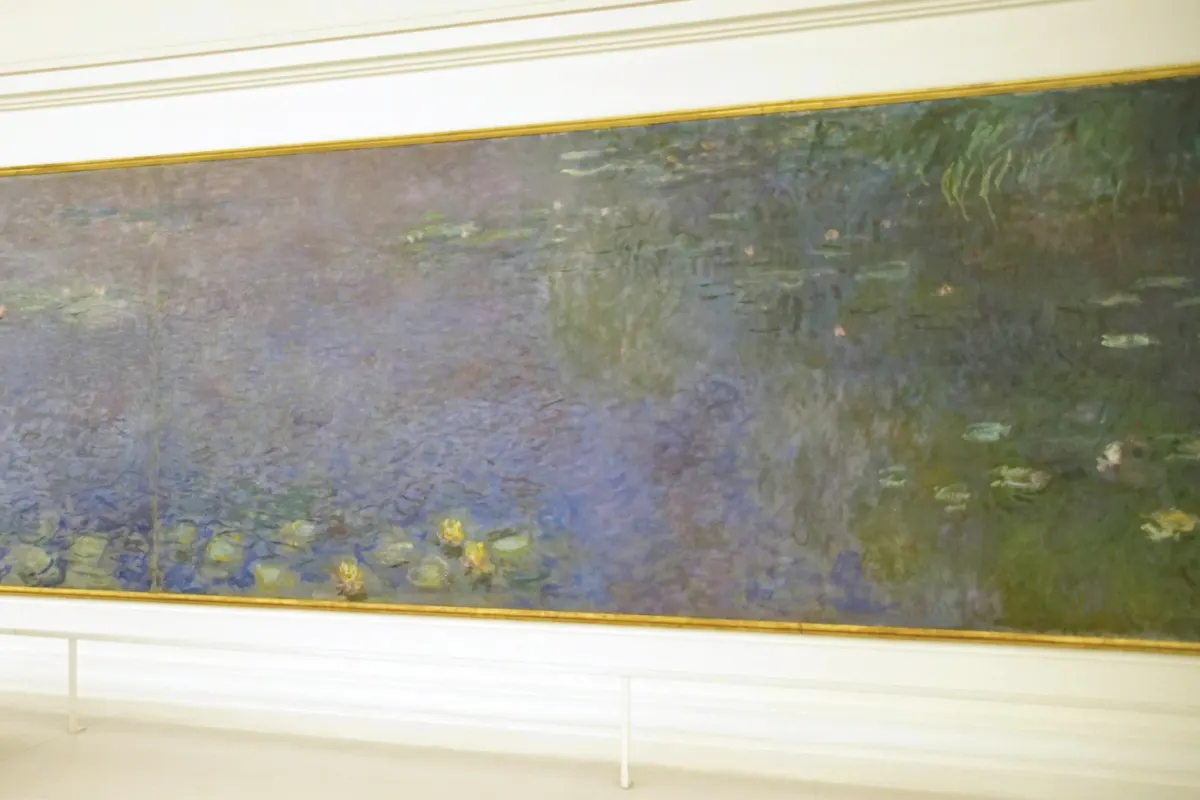
パリを訪れたとき、
セーヌ川のほとりに建つ
オランジュリー美術館を訪ねた。
When I visited Paris,
I stopped by the Musée de l’Orangerie,
nestled by the Seine.
目的は、モネの《睡蓮》。
I came to see Monet’s Water Lilies.
大きくカーブを描く展示室に足を踏み入れると、
柔らかな自然光が差しこみ、
空間全体が、
ひとつの絵の中に溶けこんでいるようだった。
The moment I stepped into the oval room,
soft natural light filled the air.
It felt as if the entire space was dissolving
into the painting.
モネが人生の終わりに近づくなかで
描いたこの連作には、
物語も、主張もない。
These were works Monet painted near the end of his life.
There’s no story, no message—
ただ、水辺に揺れる光と影が静かに広がっていた。
just the quiet drift of light and shadow across
the surface of the water.
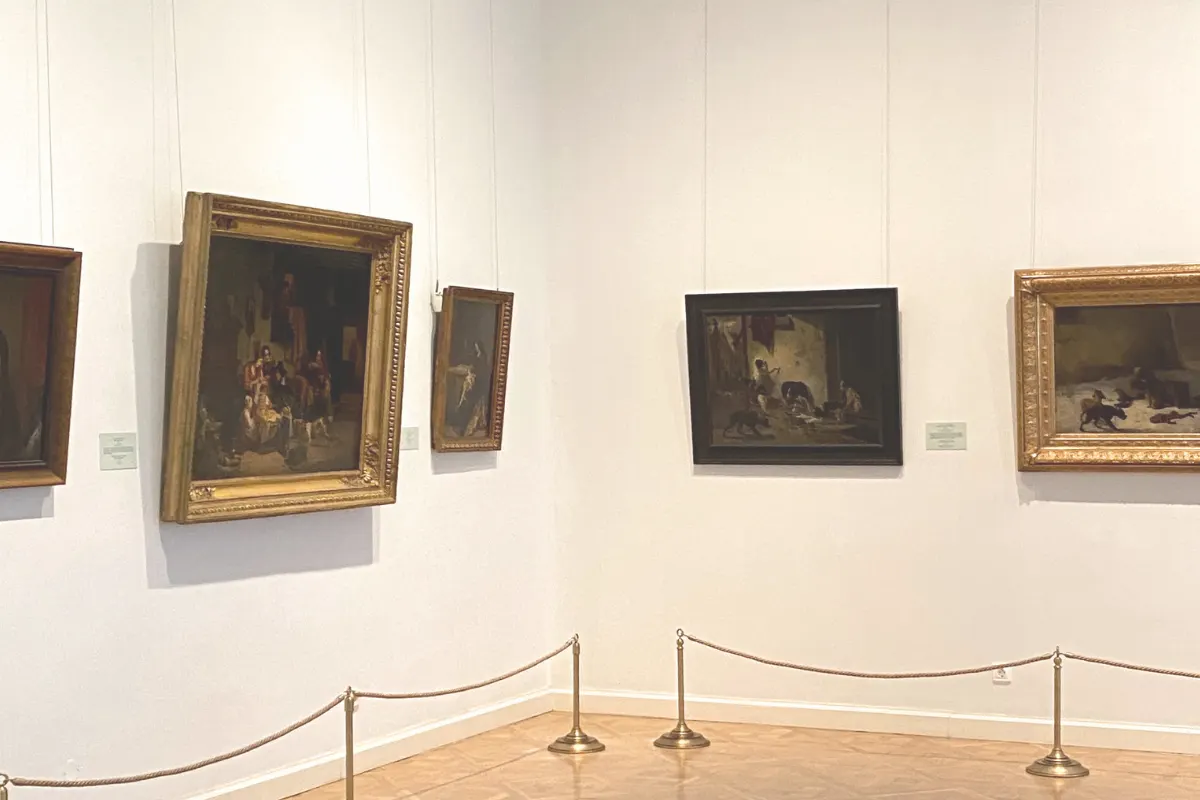
展示室の中央にはベンチがあり、
訪れる人たちはそこで、しばらくのあいだ、
ただ静かに過ごしていた。
In the center of the room stood a bench.
People sat in silence, some for a long while.
かつては床に寝そべる人の姿もあったと聞く。
I’ve heard that, before the renovation,
visitors would even lie down on the floor.
声も音もないその空間に、
それぞれが、自分のペースで滞在していた。
No voices, no sounds.
Each person lingered in their own rhythm,
held gently by the stillness.
この美術館のすごさは、
ただ名作を展示していることではなく、
“感じる時間”を受け入れてくれる、
そんな静かな余白があることだと思う。
What makes this museum so special
isn’t just the masterpieces it houses,
but the way it gives you space—
space to feel, without rushing.
それは、何かを主張するのではなく、
そこに、ただ、在るということ。
It doesn’t ask anything of you.
It simply exists, quietly.
誰かの心に、
そっと寄り添える場所であるということ。
And in doing so,
it offers a place that quietly stays
beside your heart.